
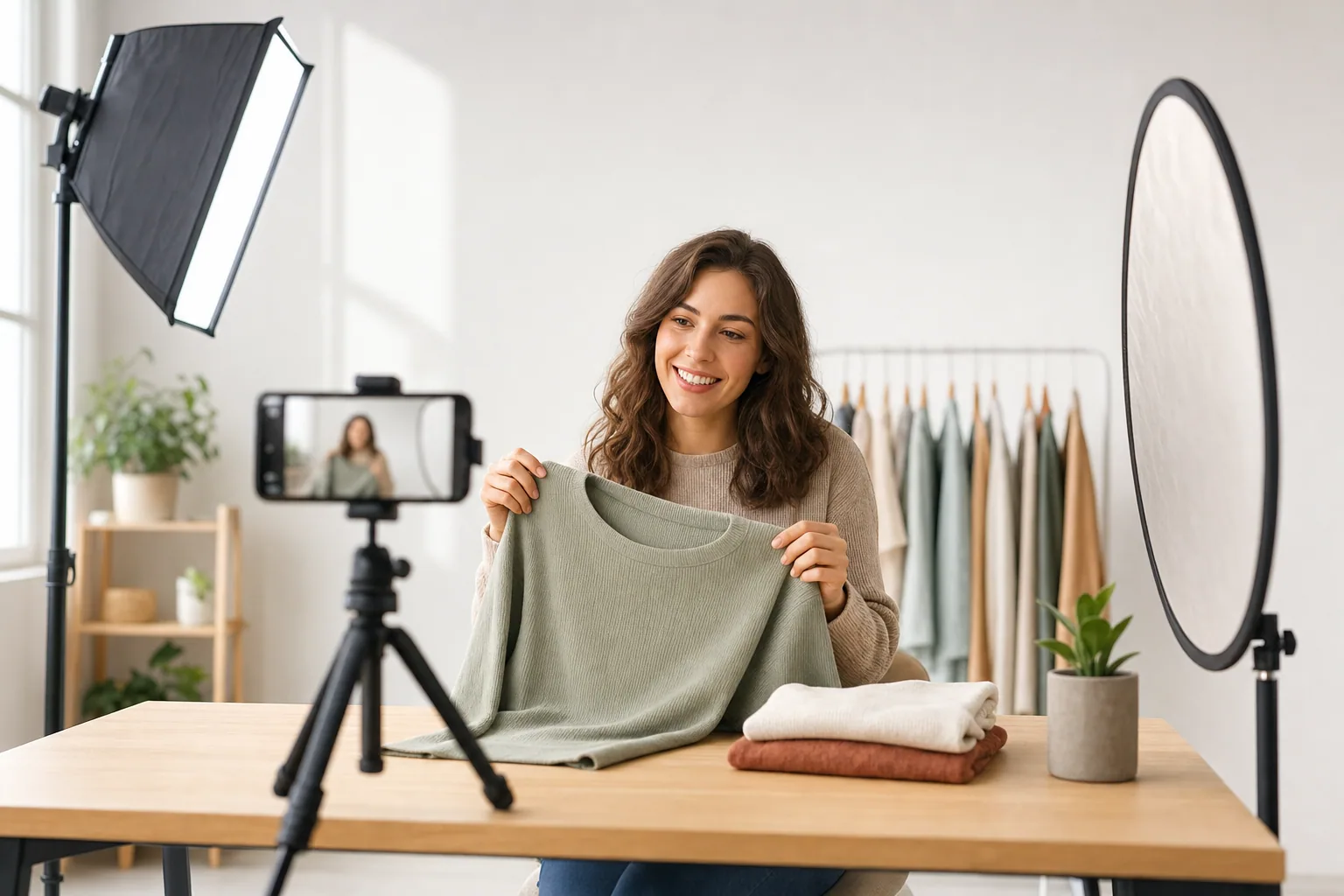
Video ads are the engine of modern performance marketing, but the myth persists that you need a six-figure production budget to compete. That's not true. What matters is strategy, speed, and iteration, not expensive gear or lengthy shoots.
At Vential Marketing, we deploy eight-figure ad budgets across Meta, Google/YouTube, and TikTok for brands that move fast. We've learned that the highest-performing creative rarely comes from the most expensive production process. It comes from directness, authenticity, and the willingness to test dozens of angles without waiting months for polish.
Why Expensive Production Often Loses
Here's what most brands get wrong: they treat video production like a film project. They script months in advance, hire a crew, rent gear, and sit on the footage for weeks waiting for edits. By the time the ad goes live, the market has shifted, the angle feels stale, or the creative simply doesn't move the needle.
The platforms don't reward production value. Meta, Google, and TikTok reward engagement, watch time, and conversions. A 15-second phone video that hooks attention in the first second outperforms a polished 60-second spot that takes three seconds to get interesting.
Budget constraints force you toward what actually works: direct communication, authentic footage, and the speed to kill losers and double down on winners within 48 hours. That's the real competitive edge.
Start With a Strong Hook
The first frame and the first three seconds are everything. No amount of production budget fixes a weak hook.
Your opening shot should:
- Show a problem the audience recognizes immediately
- Use pattern interrupts like text overlays, quick cuts, or unexpected visuals
- Promise a clear outcome or curiosity gap
- Give viewers a reason to stop scrolling before they scroll past
You don't need expensive equipment to do this. A smartphone and confidence are enough. What matters is that you understand your audience's pain point and can show it, name it, or solve it in the first second.
Many of the highest-performing ads we run use raw phone footage, minimal color grading, and text overlays that cost nothing to produce. The channel amplifies what resonates. Your job is to make the idea sharp, not the pixels.
Shoot Multiple Angles in One Day
Instead of spending $10,000 on one perfect shoot, spend $500 to $2,000 and film 20 variations in a single day. You're not trying to create one hero asset. You're creating a library of hooks, opens, and angle experiments that feed a testing engine.
One shoot day can yield:
- 5 to 10 different hook variations
- 3 to 4 testimonial or product demo angles
- 2 to 3 problem-solution sequences
- Multiple B-roll and transition options
Raw footage costs nothing. Quick edits in DaVinci Resolve, Adobe Premiere, or even CapCut take hours, not weeks. You can iterate on cuts the same day you film. By the end of week one, you have 15 to 20 finished ad variations live and spending, not sitting in a folder waiting for final review.
This production rhythm matches the Vential methodology: diagnose in 72 hours, deploy multiple creative angles by week one, iterate ruthlessly in weeks two and three, and scale the survivors aggressively in week four.
Invest in Audio, Not Just Video
Audio quality is the one place where you should not cut corners. Poor audio kills engagement faster than poor video quality. People will watch vertical phone footage, but they will not watch tinny, muffled, or distracting audio.
Invest in:
- A wireless lavalier microphone or a quality USB mic ($100 to $300)
- Audio editing software like Adobe Audition or Descript (affordable plans exist)
- Royalty-free music or a subscription service like Epidemic Sound
Clear dialogue, crisp voiceovers, and intentional background music or silence compound your message. This costs far less than reshooting footage but feels exponentially more professional.
Leverage User-Generated Content and Testimonials
Testimonials and user-generated content often outperform polished brand creative. They feel authentic because they are. Customers speaking honestly about results build trust in a way scripted ads cannot.
Reach out to your best customers and ask them to record 30 to 60 seconds of footage on their phone. Offer them a discount, credit, or feature in return. Most will do it in one take, usually vertical, sometimes shaky, often with poor lighting. That's exactly what performs.
Edit these raw testimonials minimally. Add text overlays with key results, a logo, and a call-to-action. Deploy them across all three platforms. Testimonials from real people convert consistently because they sidestep skepticism. You're not telling people your product works. Someone they relate to is telling them.
Build a Repeatable Production Workflow
Create a simple template or checklist that your team can execute the same way every time:
- Script the hook in one sentence
- Film three to five variations of that hook
- Capture B-roll and transitions
- Shoot testimonials or demos if needed
- Cut rough edits by end of day
- Add text, overlays, and music next morning
- QA and push live same day
This workflow removes decision paralysis. Everyone knows what to shoot, how to shoot it, and what the end product looks like. You move from ideation to live spend in days, not weeks.
Speed itself becomes a competitive advantage. While competitors are still in pre-production meetings, you're running 15 ad variations and learning which hooks move the needle for your audience.
The Real Cost Equation
Production budget is not the limiting factor in modern performance marketing. Platform spend is. What you should be asking is not, "How expensive should our video production be?" but rather, "How quickly can we test and validate new creative angles with the budget we're running?"
If you're spending $100,000 per month on ads, spending $2,000 to $5,000 on production is prudent. If you're spending $10,000 per month, $1,000 in production is enough. The ratio matters. Your production investment should serve your testing velocity, not your ego.
The highest-performing creative we see across the brands we work with balances authenticity with strategy. It doesn't require expensive gear. It requires clarity of message, speed of execution, and the willingness to kill ideas that don't convert and double down on ideas that do.
If you're tired of stalled campaigns and ready to move fast with serious budgets across Meta, Google, and TikTok, let's talk. Production happens alongside account strategy, not instead of it.