
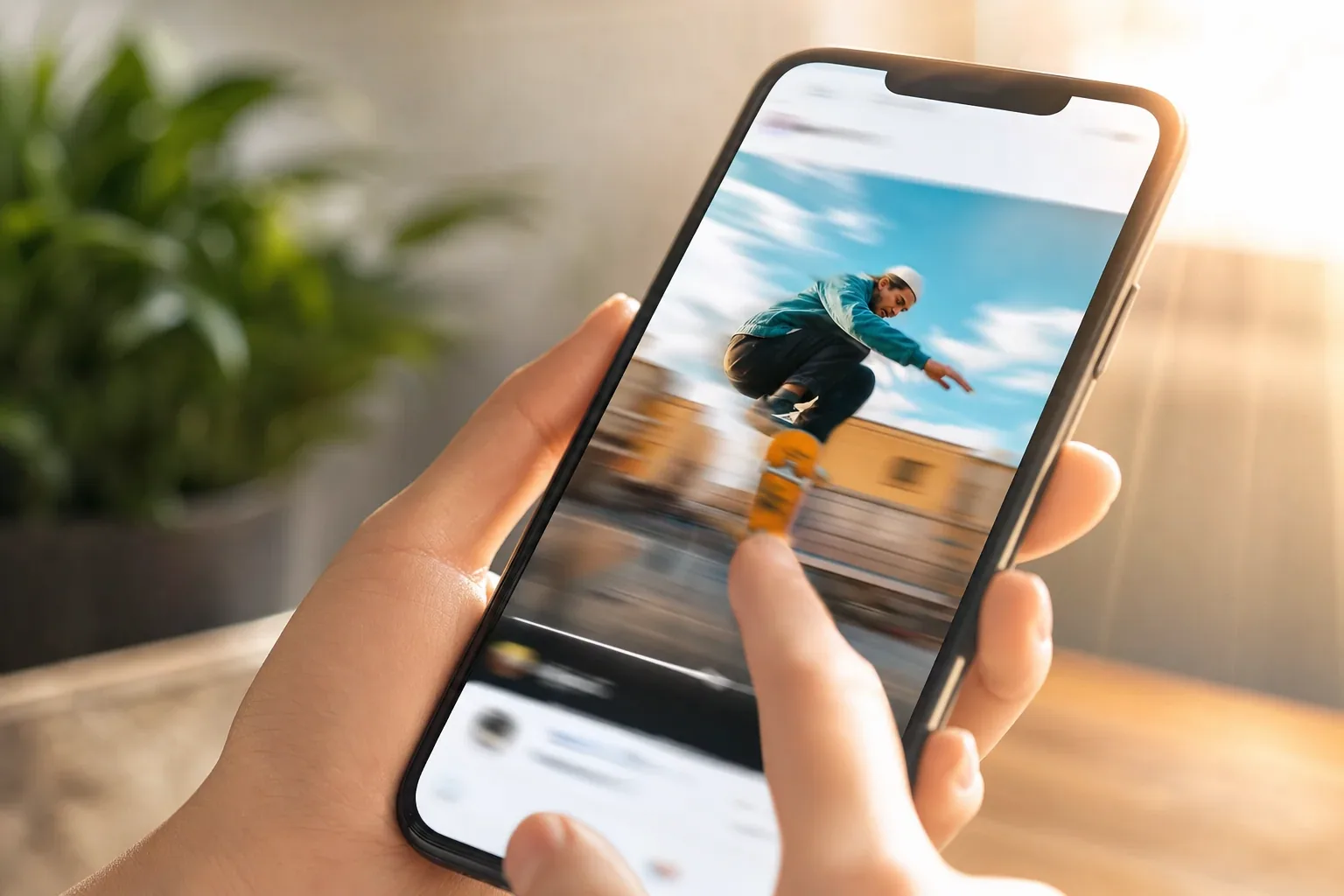
Your ad hook is the first three seconds. After that, most people keep scrolling.
That brutal reality shapes everything good advertisers do. The hook is not an afterthought. It is not the polished voiceover that comes later. It is the brutal opening line, the visual jolt, or the on-screen text that decides whether someone stops and pays attention.
Vential Marketing works with high-growth eCommerce brands, SaaS companies, course creators, and app developers running serious ad budgets across Meta, Google, and TikTok. In that work, we have seen hundreds of ad hook examples tested, refined, and scaled across eight-figure media spend. The patterns are clear. Some hooks work. Most do not. The difference is measurable within 48 hours.
This article breaks down the hook frameworks that convert, the thinking behind them, and how to deploy them across your account.
Why Hooks Matter More Than Copy Quality
You can write the most beautiful ad copy in the world. If the hook does not land, no one reads it.
The attention economy works like this: your creative gets a quarter-second to register visually or verbally. The first few words of voiceover matter. The first on-screen text matters. The opening visual matters. After that narrow window closes, you either have their attention or you do not.
Video ad hooks operate differently than static image hooks, and both operate differently than native feeds. But the core principle stays the same across platforms. You need a framework, not just inspiration.
Framework beats gut feel every single time. Once you have a framework, you can apply it to new creative variants, test multiple angles in parallel, and identify the winners fast enough to scale them before the algorithm moves on.
Ad Hook Examples That Actually Work
The strongest ad hooks do one of four things:
-
Create curiosity without answering the question. "Doctors hate this one weird trick." "I made $40K in 30 days. Here is how." The hook promises information you do not have yet, so you watch to close the loop.
-
Contradict an existing belief. "Everything you know about weight loss is wrong." "The best time to buy real estate is not when the market is hot." Hooks that flip expectations get attention because your brain registers a conflict that needs resolving.
-
Start with specificity, not generality. "I had $500 in my bank account" beats "Starting a business is hard." Specificity feels true. Generality feels like every other ad.
-
Show motion or change happening fast. Before-and-after sequences, rapid cuts, or someone visibly reacting to something. Motion stops the scroll on mobile feeds because our brains are tuned to notice movement.
These are not tricks. They are patterns that reflect how human attention actually works. The best creatives layer multiple frameworks together. A hook might start with curiosity, add contradiction, and layer in motion all in the same three seconds.
Video Ad Hooks: Platform Differences
Video ad hooks change depending on where the video runs. Meta feed videos, YouTube pre-rolls, and TikTok organic-style content all demand slightly different opens.
Meta (Facebook and Instagram): The hook is almost always visual first. Your first frame matters as much as your first line. Mouth movement on camera, on-screen text with high contrast, or an object appearing on screen all work. Voice comes second. Many Meta users scroll with sound off, so your hook cannot rely on audio alone.
YouTube: Pre-roll viewers expect a traditional ad structure. They are used to a brand reveal or a presenter. The hook here often works better as a promise or a problem statement in voiceover. 'Tired of slow software?' works better here than on TikTok, where it feels corporate.
TikTok: The hook here feels more organic and conversational. It mimics the native content style. Talking directly to camera, asking a question, or starting mid-action works better than a polished reveal. The algorithm favors creators who feel native to the platform, so your hook should too.
The framework stays the same, but the execution shifts. Test this across your own accounts and watch where patterns emerge.
Building Your Hook Framework
Here is how to approach hook creation systematically instead of ad-hoc:
Step 1: Map your core angles. What are you actually selling? A solution to a problem, access to a community, a transformation, a tool. Limit yourself to three to five core angles that your product actually delivers.
Step 2: For each angle, write three hook variations. One curiosity-based, one contradiction-based, one specificity-based. Do not overthink it. These are rough drafts.
Step 3: Test the hooks in script form first. Read them aloud. Do they sound natural? Does the hook land in the first five words, or does it take two sentences? Trim ruthlessly.
Step 4: Shoot all three per angle. If you have three angles and three hook types per angle, you have nine video variants. This is the parallel deployment that matters. Do not shoot one video and wait to judge before shooting the next.
Step 5: Measure at 48 hours. Which hooks drive the lowest cost per view? Which ones drive people into your funnel? Kill the ones that do not move the needle. Keep the ones that do and iterate the winning angles deeper.
This is where most agencies fail. They shoot one video, launch it, wait two weeks for data, and then think about the next creative. By then, the algorithm has moved on and the hook has staled. The winning approach is parallel testing and ruthless daily iteration.
Testing Ad Hooks Across Platforms
One hook does not fit all three platforms. The same hook deployed on Meta, Google, and TikTok will underperform on at least two of them because the user context is so different.
Meta users are in a social feed, interrupted and skimming. Google users are searching or watching content they came for. TikTok users are doom-scrolling and expect entertainment-first content.
Your hook architecture should account for this. The core idea stays the same, but the execution flexes per platform. Your messaging angle might be 'solution to time management' across all three, but the hook that surfaces it changes.
On Meta, you might lead with an on-screen stat: 'Most people waste 15 hours per week on email.' On Google, a voiceover: 'What if you could reclaim 15 hours every week?' On TikTok, direct address: 'I used to spend 15 hours a week on email. Now I spend 15 minutes.'
Same core benefit. Three different hooks shaped for where they run.
Common Hook Mistakes
Avoid these patterns if you want your hooks to land:
- Starting with your brand name. 'Hi, I am John, and today I want to share...' kills momentum. Start with the benefit or the hook, not the presenter.
- Using passive language. 'Your life could potentially improve if you consider...' No. 'I made $40K in 30 days' works. Active, specific, fast.
- Overloading the hook with information. The hook is not the whole pitch. It is the thread that makes someone keep watching. Let the next 10 seconds deliver more information.
- Testing only one hook at a time. You cannot know what works until you test variants in parallel. Single-test-then-wait cycles are too slow.
- Sticking with underperforming hooks for weeks. 48 hours is enough to know if a hook is pulling its weight. If it is not, kill it and move on.
The best hooks are boring to write and magnetic to watch. They are not clever for their own sake. They are ruthlessly focused on stopping the scroll and pulling the viewer into the next frame.
Speed and testing matter more than perfection. A 7 out of 10 hook that launches today and gets data within 48 hours beats a 9 out of 10 hook that takes two weeks to perfect and never launches.
If you are running high ad budgets and tired of watching mediocre hooks drain your ROAS, it is time to systematize this. Build a hook framework, test multiple angles in parallel across your platforms, and iterate daily based on what the data tells you. That is how high-growth brands move faster than the competition and turn their ad spend into real revenue.